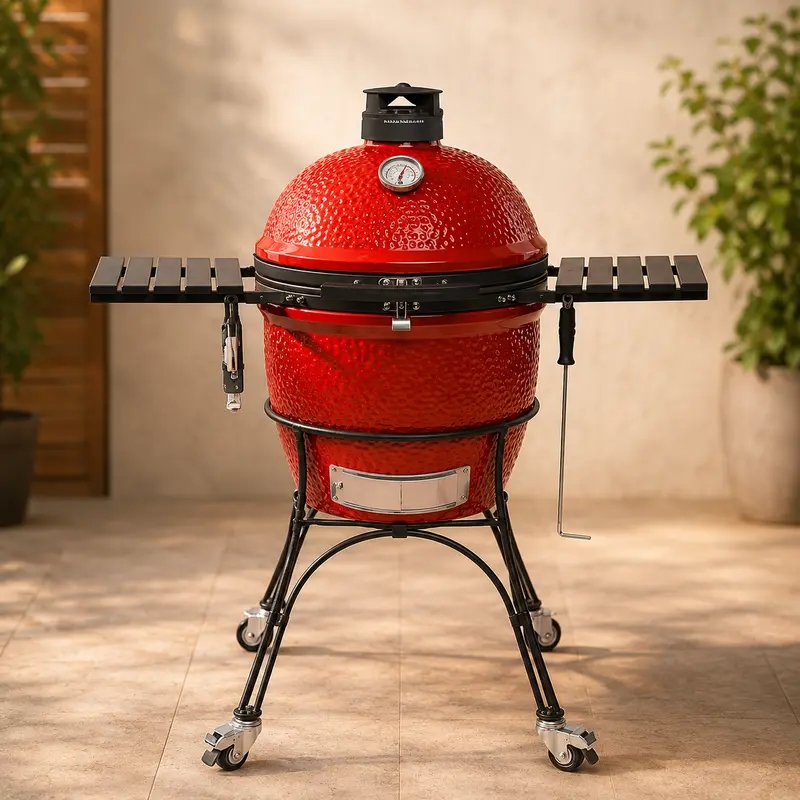
Kamado Joe Classic II Review
Ceramic Kamado Grill★★★★★
$1,400–$1,700 typical price range
The Kamado Joe Classic II is built around a thick ceramic shell that provides extraordinary insulation. This isn't decorative — the physics of ceramic heat retention is what makes kamado cooking fundamentally different from steel grills. A full load of lump charcoal in the Classic II can hold 225°F for 18+ hours or blast up to 750°F for Neapolitan-style pizza. No other grill type matches this range.
The ceramic feels substantial and premium. The glazed exterior resists weathering and the hardware — stainless steel bands, cast iron vent caps, powder-coated cart — all feel purpose-built. At 250 lbs assembled, this is not a portable cooker. You place it once and it stays. Most owners consider this permanence a feature, not a bug.
Kamado Joe's signature innovation is the Divide & Conquer flexible cooking rack system. A multi-level, half-moon grate design lets you create different cooking zones at different heights within the same grill. Put a heat deflector on one half for indirect smoking while grilling directly over coals on the other half. Or stack a pizza stone up top while roasting vegetables below.
This system is what separates the Classic II from every other kamado on the market, including the Big Green Egg. The BGE requires you to buy separate accessories to achieve what the Classic II does out of the box. For cooks who like to experiment and run multiple items simultaneously, it's transformative.
Kamado temperature control is all about airflow — the bottom draft door and top vent cap work together to regulate how much oxygen reaches the charcoal. It takes 2-3 cooks to develop an intuition for the vent positions, but once learned, a kamado holds temperature with a stability that surprises even experienced pellet grill owners.
The Classic II is particularly good at low-and-slow stability. Set the vents for 225°F, close the lid, and check back in 6 hours — it'll still be within 10 degrees. At the high end, opening the vents wide and letting the charcoal roar delivers 700°F+ temps for pizza in 60-90 seconds. The range is genuinely remarkable.
In a given week, the Classic II might smoke a pork shoulder for 14 hours on Saturday, grill burgers for 20 minutes on Tuesday, bake sourdough bread on Wednesday, and fire a pizza at 750°F on Friday. No other single cooker offers this range. It replaces a smoker, a grill, and an outdoor oven.
The accessories expand this further: a rotisserie kit, a cast iron griddle, soapstone inserts, and various grate configurations. The Kamado Joe accessory ecosystem isn't as large as Big Green Egg's yet, but it covers every common use case.
Day-to-day cleaning is simple: burn off residue by opening the vents and letting the kamado hit 500°F+ for 15 minutes, then brush the grates. The slide-out ash drawer makes ash removal much easier than the Big Green Egg's manual cleanout process — pull the drawer, dump it, slide it back.
Long-term ceramic maintenance is minimal. Keep the grill covered when not in use, don't expose hot ceramic to rain (thermal shock risk), and inspect the gasket annually. Replacement gaskets cost $30-40 and take 20 minutes to install. Many owners report 10+ years without needing a gasket change.
The elephant in the room: is the Kamado Joe Classic II better than the Big Green Egg Large? In our assessment, yes — for most buyers. The Classic II includes the Divide & Conquer system, air-lift hinge, and ash drawer that are all extra-cost options on the BGE. When you price a comparably equipped Big Green Egg, the Kamado Joe is several hundred dollars less.
The BGE has advantages in brand legacy, resale value, and accessory ecosystem depth. But for a new buyer choosing between the two, the Kamado Joe delivers more value out of the box. Our detailed comparison is here.
The original. Larger accessory ecosystem, stronger resale value. Costs more for similar features.
Read KJ vs BGE comparison →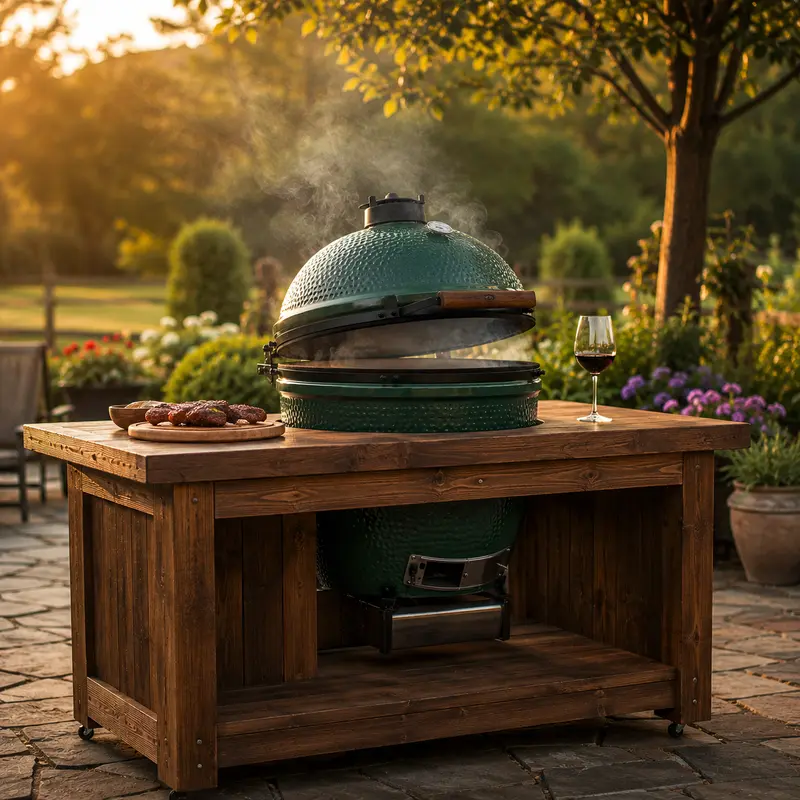
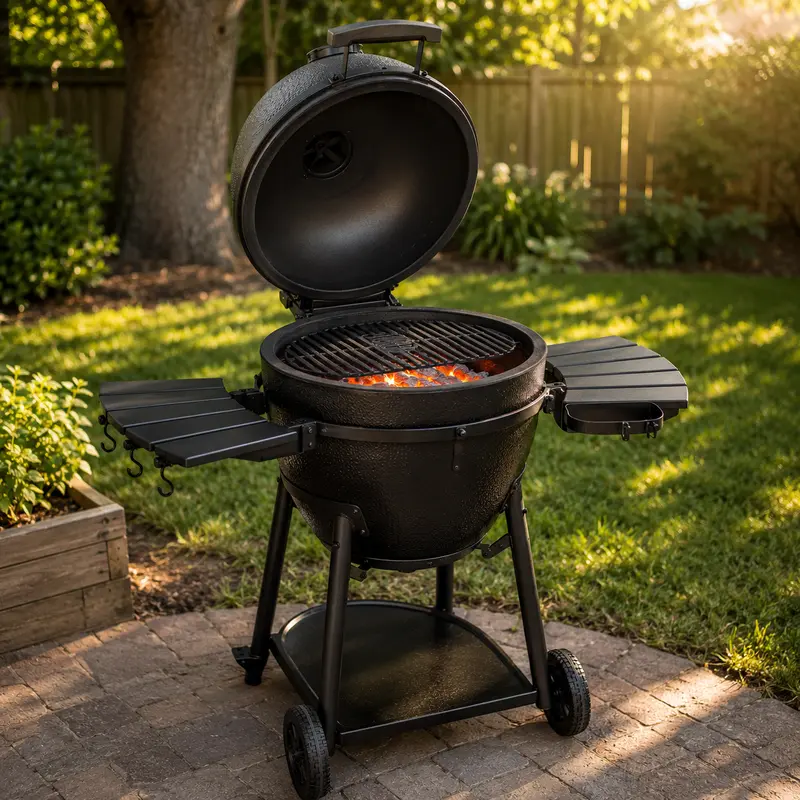
Kamado-style cooking at 1/4 the price. Steel instead of ceramic, but surprisingly capable.
See all kamado grills →
Weber's take on the kamado — steel with air insulation. Hinged diffuser plate is clever.
See all kamado grills →