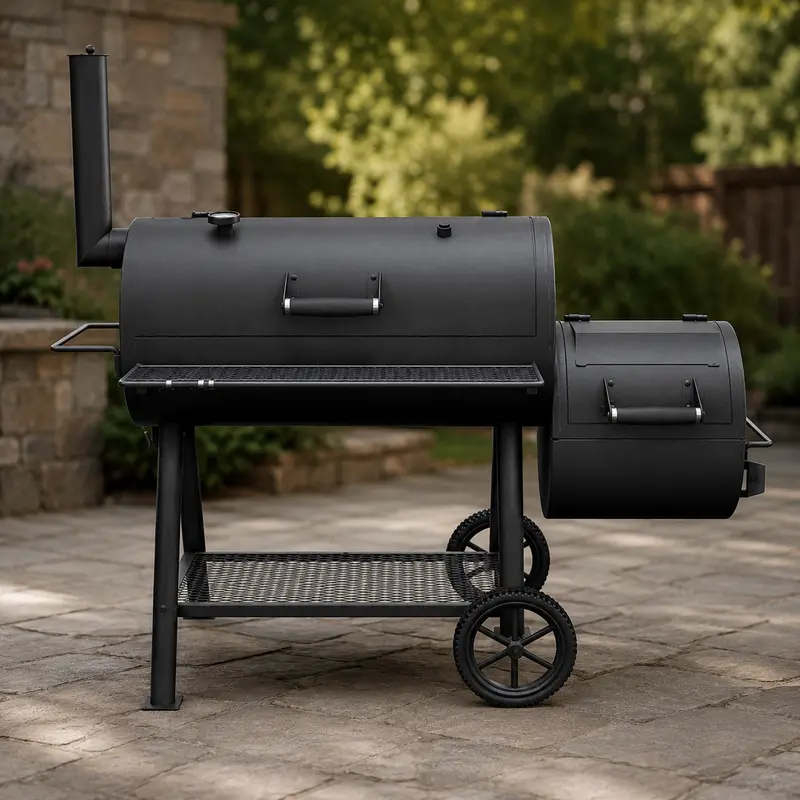
Oklahoma Joe's Highland Review
Offset Smoker★★★★★
$350–$450 typical price range
The Oklahoma Joe's Highland punches well above its weight class in build quality. The heavy-gauge steel body has a heft that competitors in the $200-300 range simply don't match. Pick up the lid of a Highland and then pick up the lid of a Char-Griller — the difference is immediately obvious. This thicker steel matters because it retains heat better, meaning more stable temperatures and less fuel consumption.
That said, this is still a $400 smoker, and some compromises show. The factory paint is thin and will peel or rust at high-heat areas within a season or two. Most owners hit the firebox with high-temp spray paint annually. The doors and joints have gaps that leak smoke — addressable with $15 worth of high-temp gasket material, but it's work you shouldn't need to do on a new product.
Offset smoking is a skill, and the Highland is where thousands of pitmasters have learned it. The large firebox fits real wood splits — not just charcoal with wood chunks, though that works too. Multiple adjustable dampers on the firebox and smokestack give you genuine airflow control, which is the key to maintaining consistent temperatures.
Expect a learning curve of 3-5 cooks before you can hold 225°F reliably. The first couple of sessions will involve temperature swings, running too hot or too cold, and the occasional frustrated trip to a restaurant for dinner. This is normal. Every offset smoker requires this apprenticeship — the Highland just makes it more affordable.
Once dialed in, the Highland holds temperature respectably well. It's not a Yoder or Meadow Creek — you'll check and adjust every 30-45 minutes rather than every 2-3 hours — but the results are genuine stick-burning BBQ that no pellet grill can replicate.
A huge part of the Highland's appeal is the modification community. BBQ forums, Reddit, and YouTube are packed with proven mods that dramatically improve performance. The essential ones are well-documented and require basic tools.
The most recommended modifications are: high-temp gasket sealing on the firebox-to-chamber joint, door gaps, and smokestack base ($15, 30 minutes); a grate-level thermometer to replace the inaccurate lid-mounted factory unit ($20, 5 minutes); and tuning plates or a reverse-flow baffle to even out hot spots ($40-80, 1 hour). Total cost: $75-115. Total time: under 2 hours. The performance improvement is dramatic — these mods turn a good smoker into an excellent one.
With mods in place, the Highland produces serious BBQ. Briskets develop deep bark and a clean smoke ring. Ribs come out with that unmistakable wood-fired flavor that you simply cannot get from a pellet or electric smoker. The 900 sq in of cooking space means you can run a full brisket on the main grate with a rack of ribs on the upper shelf.
The firebox doubles as a direct-heat grilling area when you're not smoking — throw a grate on it and you've got a charcoal grill for burgers and steaks. It's a nice bonus that adds versatility without any extra cost.
The Highland is for people who want to learn real offset smoking without spending $1,500+ on a Yoder or Meadow Creek. It's for pitmasters who enjoy the hands-on process of managing a fire. It's for anyone who believes the best BBQ comes from real wood and real fire — and who's willing to put in the work to prove it.
It's not for people who want to set a temperature and walk away. If that's you, buy a pellet grill and be happy. The Highland rewards attention and effort — and the BBQ it produces when you bring both is outstanding.
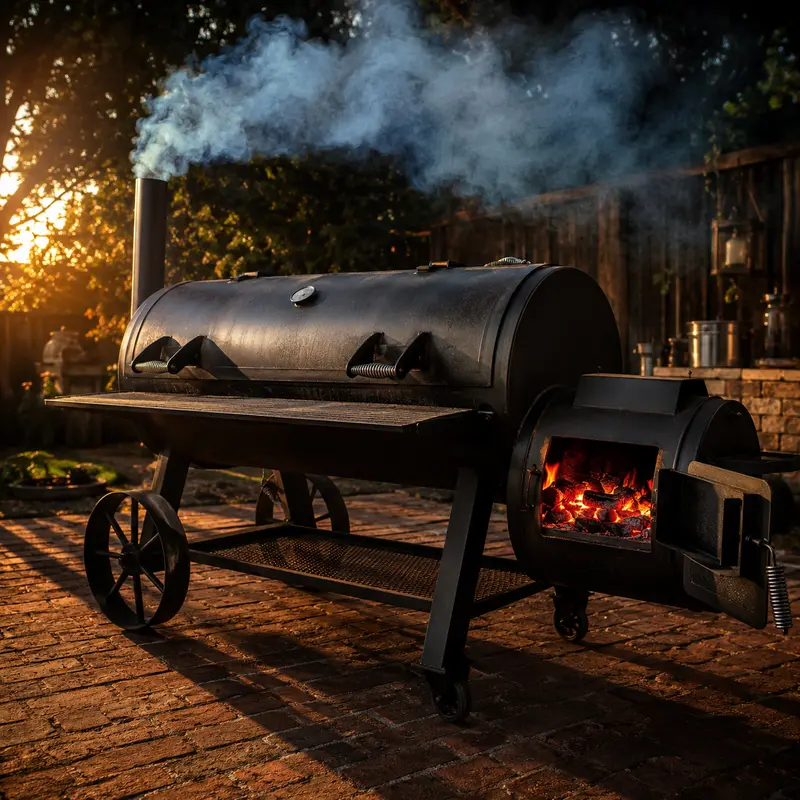
Cheaper entry point if you're testing whether offset is for you. Less capable but lower commitment.
Read OKJ vs Char-Griller comparison →
The Highland's bigger sibling with reverse-flow included. More cooking space, more even temps.
See all offset smokers →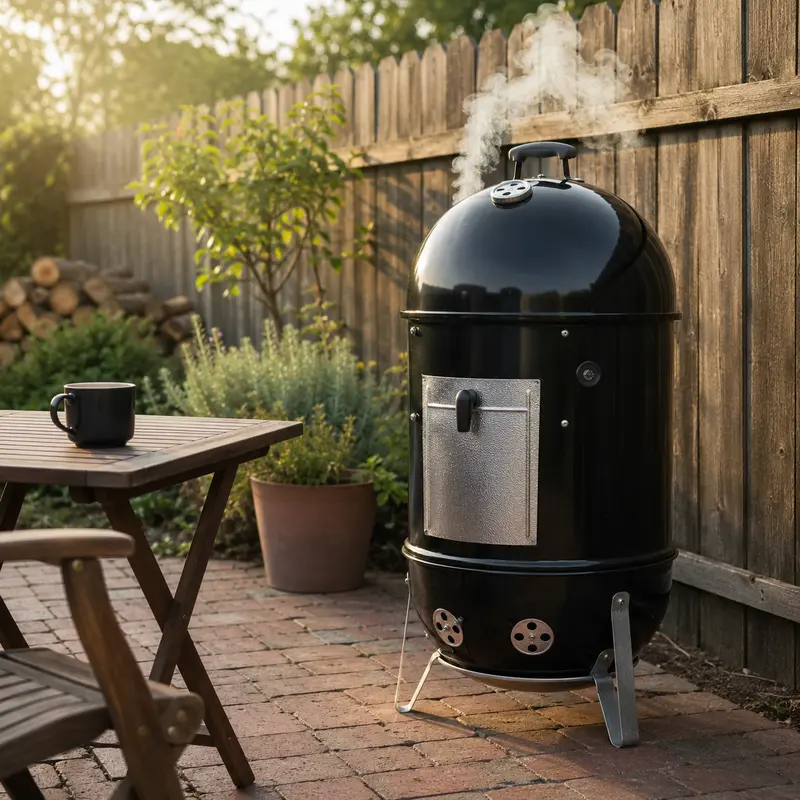
If you want charcoal smoke flavor without the fire management intensity of an offset.
See charcoal smokers →