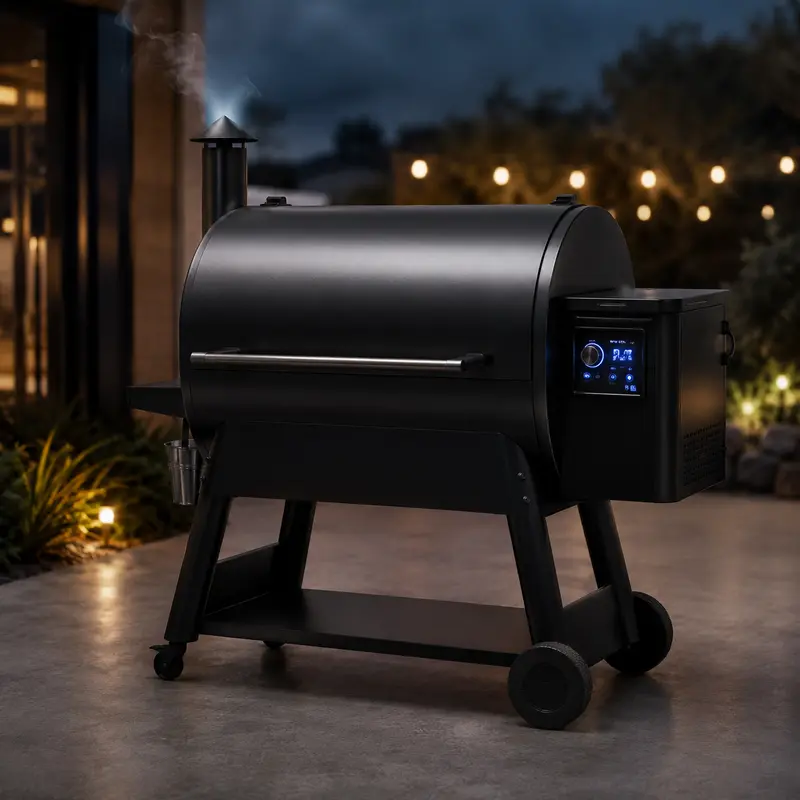
Traeger Ironwood XL Review
Pellet Grill / Smoker★★★★★
$1,800–$2,200 typical price range
Traeger invented the pellet grill in 1986, and the Ironwood XL represents 40 years of refinement. The company that created the category knows pellet cooking better than anyone, and it shows in the details: the D2 Direct Drive motor starts faster and feeds pellets more precisely than competitors. The downdraft exhaust system pulls smoke across the food before exiting, creating more even cooking and better smoke distribution.
The Ironwood XL sits at the top of Traeger's consumer line (below the commercial Timberline models). It's built for pitmasters who want the best pellet grilling experience money can buy — and are willing to pay a premium for the Traeger name and ecosystem.
Super Smoke mode is Traeger's answer to the criticism that pellet grills don't produce enough smoke flavor. Available at temperatures below 225°F, it alternates the fan and auger speed to push maximum wood smoke into the chamber during the critical low-temp window when meat absorbs the most flavor.
Does it work? Yes — noticeably. Briskets smoked with Super Smoke for the first 4-5 hours develop a deeper smoke ring and more pronounced wood flavor than the same cook on a standard pellet grill. It's the closest a pellet grill gets to replicating the smoke depth of a charcoal or offset smoker. This single feature is the primary reason to choose the Ironwood over competitors.
The Traeger WiFIRE app is, objectively, the best app in the pellet grill space. Thousands of guided recipes with step-by-step timing, a community feed of other Traeger users' cooks, remote control from anywhere via WiFi, and integration with Alexa and Google Home. The app alone is worth considering in your purchase decision.
Reliability is generally strong — WiFi connectivity is more stable than Bluetooth-dependent competitors. The guided recipes are particularly valuable for newer cooks: pick a recipe, it sets the temp, tells you when to probe, when to wrap, when to pull. It's like having an experienced pitmaster in your pocket.
The D2 controller maintains temperature within ±10°F in normal conditions. Recovery after opening the lid is fast — 3-5 minutes back to set temp. The downdraft exhaust creates noticeably more even temperatures from left to right across the grate than standard pellet grills with a single exhaust stack.
Build quality is premium: powder-coated steel, magnetic door closure, stainless steel grate, and solid casters. It feels like a serious piece of outdoor cooking equipment. At 185 lbs, it has presence and stability. Assembly is straightforward and takes about 90 minutes.
The Ironwood XL's biggest limitation compared to the Weber Searwood 600 is searing. It maxes out at 500°F with no direct-flame option. You can get a decent char at 500°F, but it's not the 600°F+ direct-flame searing that the Weber delivers.
Traeger's answer is the optional flattop griddle accessory or finishing steaks in a cast iron pan heated on a side burner. These work, but they require additional equipment. If high-heat searing is important to you, the Weber Searwood (comparison here) is the better choice.
This is the central question. The Traeger Ironwood XL costs $300-700 more than competitors with similar cooking area and temperature ranges. What you're paying for is Super Smoke mode, the WiFIRE app ecosystem, the D2 drivetrain, and the Traeger brand.
If Super Smoke and the app are important to you — and for many pitmasters they genuinely are — the premium is justified. If you want the most features per dollar, the Weber Searwood 600 delivers searing, a larger cooking area, a longer warranty, and a lower price. Both are excellent; it depends on what you value most.
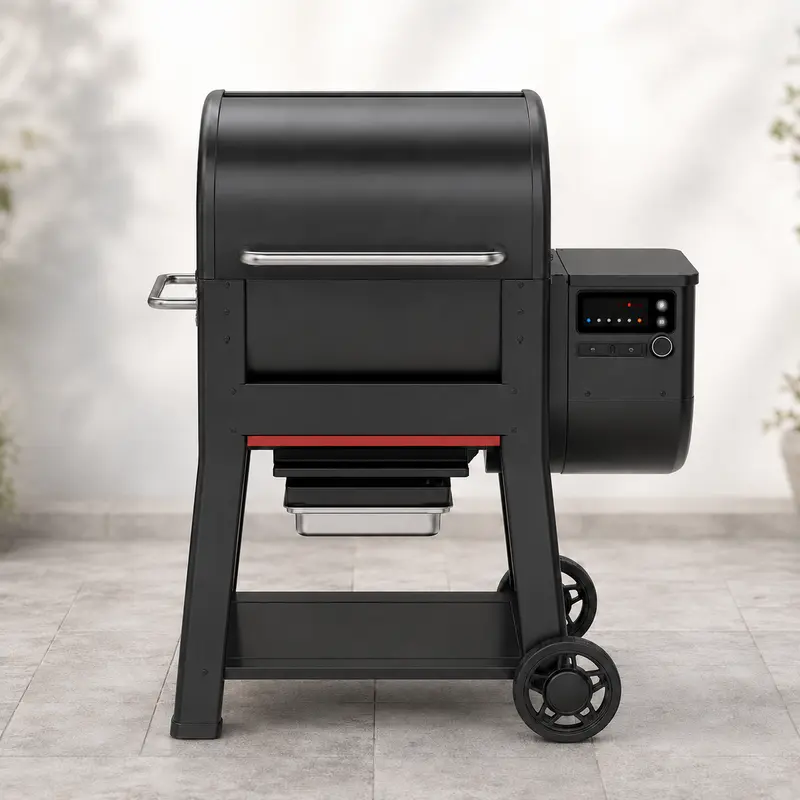
More cooking area, searing capability, 5-year warranty, lower price. Our top pick for most buyers.
Read Traeger vs Weber comparison →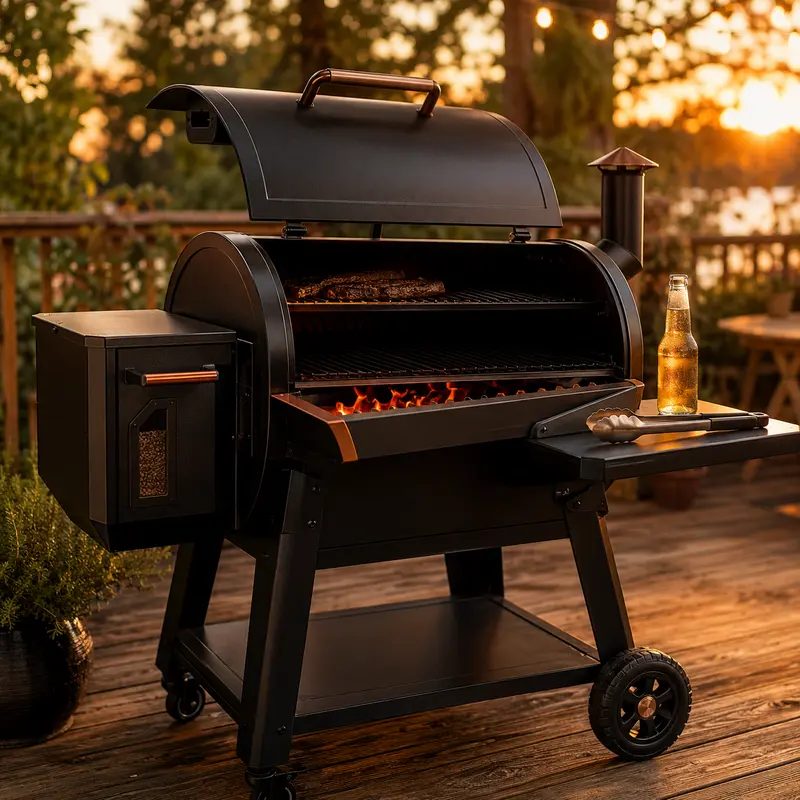
Tighter temp control + ash cleanout + Sidekick expandability. Less smoke flavor, better convenience.
Read Pit Boss vs Camp Chef →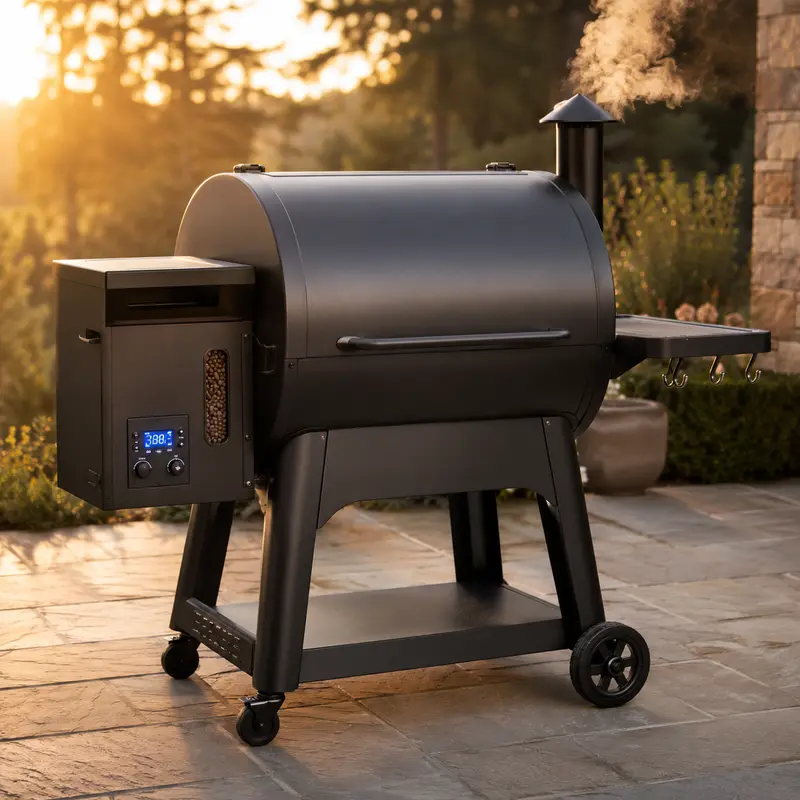
WiFi + flame broiler at a fraction of the price. 80% of the performance at 40% of the cost.
See all pellet smokers →